
£1.1m
140m²
Manchester University NHS Foundation Trust
Marcon Construction, for Equans
Murphy Philipps Architects
Leeds and London
2026
- Engineering services design
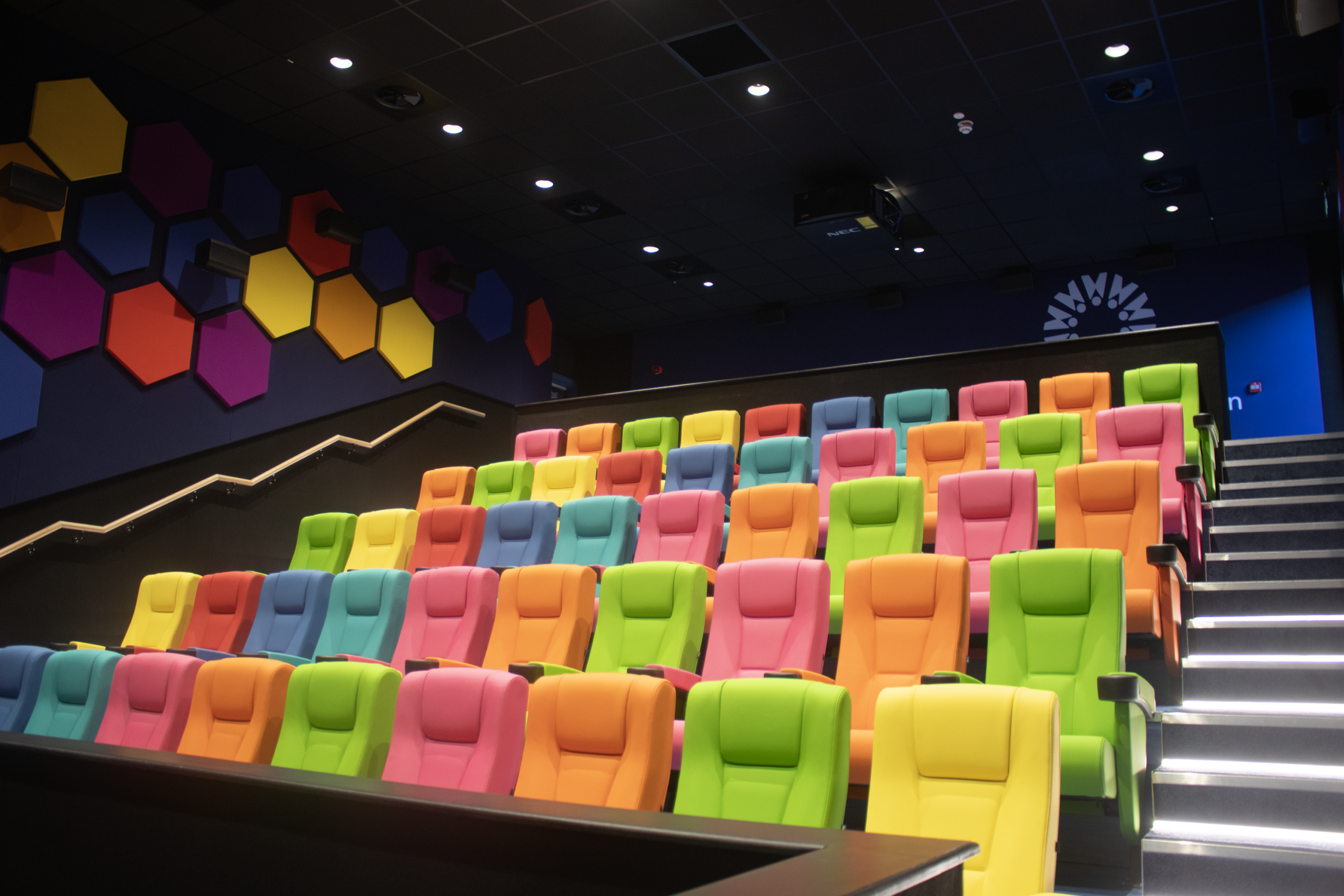
Manchester Royal Infirmary has transformed a former lecture theatre into a new MediCinema, giving patients and their families the chance to spend valuable time together away from the ward environment and enjoy the magic of the movies on the big screen without leaving the hospital.
The fully accessible 50-seat cinema welcomes patients from across Manchester Royal Infirmary, Royal Manchester Children’s Hospital, Saint Mary’s Hospital and Manchester Royal Eye Hospital.
As lead engineering services designers on the project, we were faced with a unique yet rewarding brief: help create an authentic cinema experience within a live acute healthcare setting.
To achieve this, the auditorium needed to deliver the environmental comfort, lighting, acoustics and technical performance expected of a commercial cinema while safely accommodating hospital beds, wheelchairs, medical equipment and the clinical teams supporting patients throughout each screening. The project was delivered within an existing lecture theatre in an operational acute hospital, bringing additional challenges around existing infrastructure, infection control, maintainability and phased delivery. The engineering design needed to work with the constraints of the existing space while providing a resilient strategy that met NHS requirements.
Our team worked closely with MediCinema, hospital teams, clinicians, design consultants and delivery partners through a series of stakeholder workshops and design reviews. This provided an opportunity to understand how the space would be used and incorporate clinical requirements early in the design, from accessible circulation and bed positioning to nurse support and the integration of specialist audio-visual equipment.
Existing services were reviewed and adapted alongside the introduction of new engineering systems, with ventilation, environmental comfort, lighting controls, power and specialist equipment interfaces carefully coordinated within the auditorium. Acoustic separation and audio-visual requirements were also considered alongside the wider building services, helping to maintain the immersive quality of the cinema without compromising the needs of the hospital.
The cinema can also support wider hospital use when screenings are not taking place, giving the space flexibility beyond its primary purpose.
Today, the cinema hosts around 260 screenings each year, offering patients and their families moments of normality, connection and escape during long hospital stays. Whilst the engineering is largely invisible, it enables the experience of the cinema to take centre stage quietly, supporting the complex healthcare environment around it.